
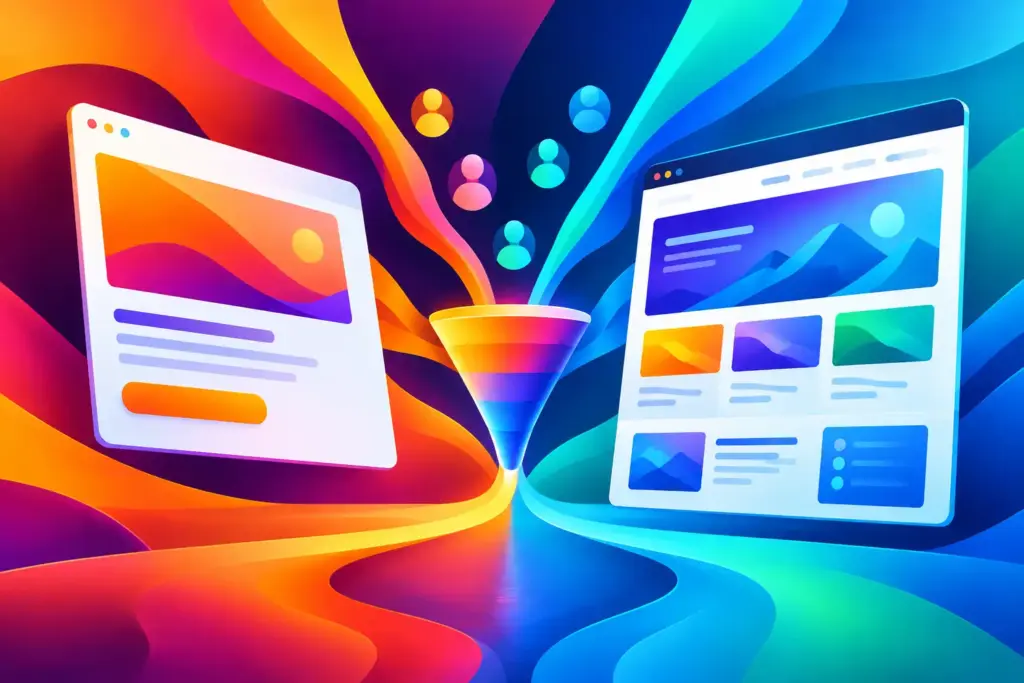
A paid advert can bring a potential customer to your business in seconds. The question is whether they arrive at a focused page built to generate an enquiry, or a broader site where they can explore, compare and build trust. That is the practical difference between landing pages versus websites – and getting it wrong can make good marketing spend work much harder than it should.
For most growing businesses, this is not an either-or decision. A professional website and well-planned landing pages do different jobs. The strongest results usually come from knowing what each one is for, then connecting them to the right traffic source and commercial goal.
What a website is designed to do
A website is your digital business premises. It gives prospects, customers, partners and search engines a clear picture of who you are, what you offer and why they should choose you.
Unlike a single campaign page, a website needs to answer a range of questions. A visitor might want to check your services, look at past work, read reviews, find your location, understand your process or contact the right person. Someone researching a new kitchen, for example, may visit several pages before requesting a quote. A B2B buyer may need to assess your credentials and expertise before agreeing to a conversation.
That breadth is a strength. A good website builds credibility over time, supports search visibility and gives every marketing channel a reliable destination. It is particularly valuable when people do not yet know exactly what they need, when your services are complex, or when a buying decision involves significant cost or risk.
A high-performing website should make the next step obvious without forcing every visitor down the same path. It might offer quote requests, telephone calls, brochure downloads, bookings or visits to a showroom. It should also show evidence: customer feedback, case studies, sector experience, clear service information and professional brand presentation.
What a landing page is designed to do
A landing page is a focused page created around one audience, one offer and one desired action. It removes unnecessary choices so the visitor can quickly understand what is being offered and decide whether to respond.
For example, a property maintenance firm running a Google Ads campaign for emergency repairs may send clicks to a page specifically about that service. The page could explain response times, coverage area and pricing approach, show relevant reviews, and ask the visitor to call or request help. It does not need to send them towards every other service the business provides.
The same principle applies to a restaurant promoting private events, a training provider advertising a specific course, or a medical practice encouraging consultations for a particular treatment. The message in the advert, email or social post should continue on the page. That consistency reassures visitors they are in the right place and reduces the chance that they leave to search elsewhere.
A landing page is not simply a stripped-back website page. Its structure is deliberately built around conversion. It usually has a clear headline, relevant benefits, proof that the business is credible, answers to likely objections and a prominent call to action. Every element should earn its place.
Landing pages versus websites: the commercial difference
The biggest difference is intent. Websites help people explore, validate and find you. Landing pages help people act on a specific message.
This matters because not all traffic arrives with the same level of interest. A person who searches for your company name may want your full website. They might be checking whether you are established, reading reviews or looking for a contact number. A person who clicks an advert offering a free consultation has been presented with one clear proposition. Sending them to a general homepage can create friction at precisely the wrong moment.
Landing pages are usually better suited to campaign measurement, too. When one page has one main action, it is easier to see whether an advert, audience or offer is producing enquiries. You can test a headline, form length, customer testimonial or call to action and measure the impact with more confidence.
Websites are harder to judge on one conversion alone because they support multiple journeys. That does not make them less accountable. A website should still be measured through qualified enquiries, calls, bookings, sales and visibility for relevant searches. It simply has a broader role in the customer journey.
When a website should come first
If your existing online presence looks dated, lacks essential information or does not clearly explain what you do, investing in landing pages before fixing the website may only mask a larger problem. Visitors who discover your business through an advert often look beyond the campaign page before committing. If the rest of your digital presence feels inconsistent or unconvincing, trust can fall away.
A website should normally be the priority when you need to establish a credible brand, compete in organic search, serve several customer groups or offer a broad set of services. It is also central for businesses that depend on local visibility, as customers often look for service areas, opening times, directions and reviews before getting in touch.
For businesses with longer sales cycles, the website does much of the patient work. It gives prospective buyers the material they need to involve colleagues, compare suppliers and return when the timing is right. Good service pages, useful content and strong proof help turn initial awareness into a qualified conversation.
When a landing page should come first
A landing page is often the right immediate investment when you have a defined offer and a reliable way to send relevant visitors to it. This could be a paid search campaign, targeted social advertising, an email promotion, a local seasonal offer or a direct mail campaign supported by a QR code.
It is especially useful when your campaign has a narrow objective: generate roofing inspections before winter, fill places on a workshop, book wedding venue viewings, secure commercial cleaning enquiries, or promote a limited-time finance offer. In each case, a generic homepage asks the visitor to do too much work. A dedicated page makes the proposition easier to understand and respond to.
That does not mean landing pages are only for short-term promotions. Businesses can use permanent landing pages for high-value services, locations or audience segments. The key is to avoid producing near-identical pages just to cover every possible keyword. Pages need genuinely useful, specific content and a reason to exist beyond search rankings.
Common mistakes that reduce results
The most expensive mistake is treating a landing page as an isolated asset. A strong page cannot compensate for poor targeting, an unclear offer, slow follow-up or a sales team that has no process for handling leads. Conversion begins before the click and continues after the form is submitted.
Another frequent issue is asking for too much too soon. Long enquiry forms can discourage a visitor who is only beginning their research. For a complex service, asking for a name, contact details and a short description may be enough to start the conversation. If you need more information, your follow-up process can gather it.
Businesses also lose leads when their pages make claims without proof. Clear testimonials, relevant project examples, qualifications, guarantees and straightforward information about what happens next can all reduce hesitation. The proof must match the offer. A review praising your general customer service is useful, but a case study about the exact service being promoted is stronger.
Finally, do not build a landing page and assume the job is finished. Review how visitors behave, which channels create qualified leads and where enquiries are dropping off. Small improvements can produce meaningful gains when a campaign is receiving regular traffic.
Build the right journey, not just the right page
A practical way to decide is to start with the customer and the action you want them to take. If you need to build broad confidence, explain several services and attract search traffic over time, start with a capable website. If you are promoting one clear offer to a defined audience, use a landing page designed around that campaign.
In many cases, the answer is both. Your website establishes the credibility that makes a business worth contacting. Your landing pages turn focused campaign attention into enquiries that can be measured, followed up and improved.
The useful next step is not to ask which asset is better in theory. Ask where your best prospective customers are coming from, what they need to see before acting and whether your current journey makes that action easy. That is where stronger lead generation starts.